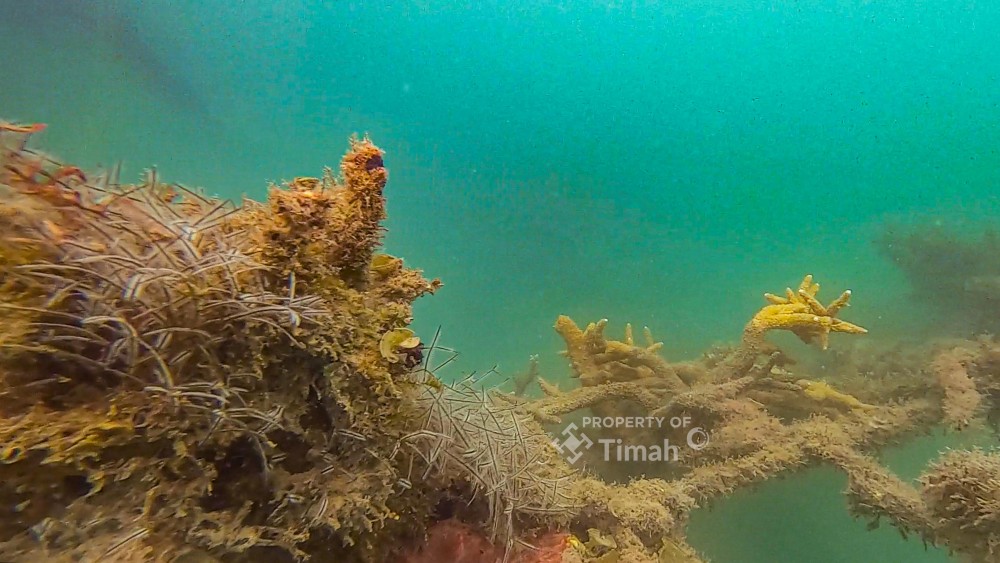
PANGKALPINANG -- Coral gardens, or artificial coral reef gardens, have become an important innovation in efforts to protect and restore marine and coastal ecosystems. For this reason, PT TIMAH Tbk has continuously deployed coral gardens across the company’s operational areas.
Throughout 2025, PT TIMAH Tbk deployed 45 coral garden units at Putri Island and the waters of Tuing, Bangka Regency, as part of its corporate social responsibility (CSR) and sustainable environmental management programs.
The coral garden program consists of artificial structures placed on the seabed to support coral reef growth and create new habitats for various marine species.
This initiative is part of PT TIMAH Tbk’s efforts to maintain the balance of marine ecosystems while also leveraging social and economic potential for communities around the company’s operational areas.
The coral garden structures are designed to increase underwater biodiversity by providing natural media for coral growth. These new habitats serve as shelters and breeding grounds for fish and other marine life, allowing marine populations to be maintained and increase over time.
With the addition of artificial coral reefs, marine ecosystems become more stable and productive, helping rehabilitate damaged marine areas and contributing positively to environmental sustainability.
“The deployment of coral gardens is part of the company’s consistency and commitment to supporting the preservation of marine and coastal ecosystems. Through this program, PT TIMAH Tbk demonstrates its concrete commitment to environmental sustainability through underwater ecosystem restoration initiatives designed to support the recovery of marine life and maintain ecological balance in a sustainable manner,” said Anggi Siahaan, Department Head of Corporate Communication of PT TIMAH Tbk.
Anggi added that the coral garden program is not only focused on conservation but also provides tangible benefits for coastal communities, especially fishermen, by improving the quality and productivity of marine resources.
The installation of coral gardens is expected to have a direct impact on fishermen’s welfare. These structures attract fish and other marine life, allowing fishermen to avoid traveling too far offshore to obtain adequate catches, thereby saving operational costs such as fuel and reducing risks at sea.
In addition, PT TIMAH Tbk involves local communities in every stage of the program, from construction and deployment to monitoring, creating job opportunities and directly empowering the coastal economy.
Beyond its ecological and economic benefits for fishermen, coral gardens have also become new tourist attractions, particularly for snorkeling and diving activities. These artificial reef sites have developed into natural habitats that visitors can enjoy to experience the beauty of the underwater environment and interact directly with marine life.
As shared by a fisherman in Penyusuk, Ramadan said they have directly felt the benefits of the coral gardens deployed by PT TIMAH Tbk. He can now fish closer to shore, and his catches have increased.
“What we feel the most is that we no longer need to go far out to sea, because the coral garden is deployed only about one mile from shore. There are also plenty of fish like red snapper. We also save on fuel costs,” he said some time ago.
As a tourism operator, Rama also noted that the presence of coral gardens helps him guide visitors to good snorkeling spots.
“I usually take guests to Putri Island from Penyusuk Beach. With the coral garden spots, we can show tourists which areas are best for snorkeling, so they can see the fish. I hope this program continues so there will be more coral garden points,” he said.
PT TIMAH Tbk’s efforts to deploy coral gardens are in line with ESG (Environmental, Social, and Governance) principles, which place environmental preservation and community empowerment as integral parts of the company’s business strategy, not only for today but also for future generations. (*)