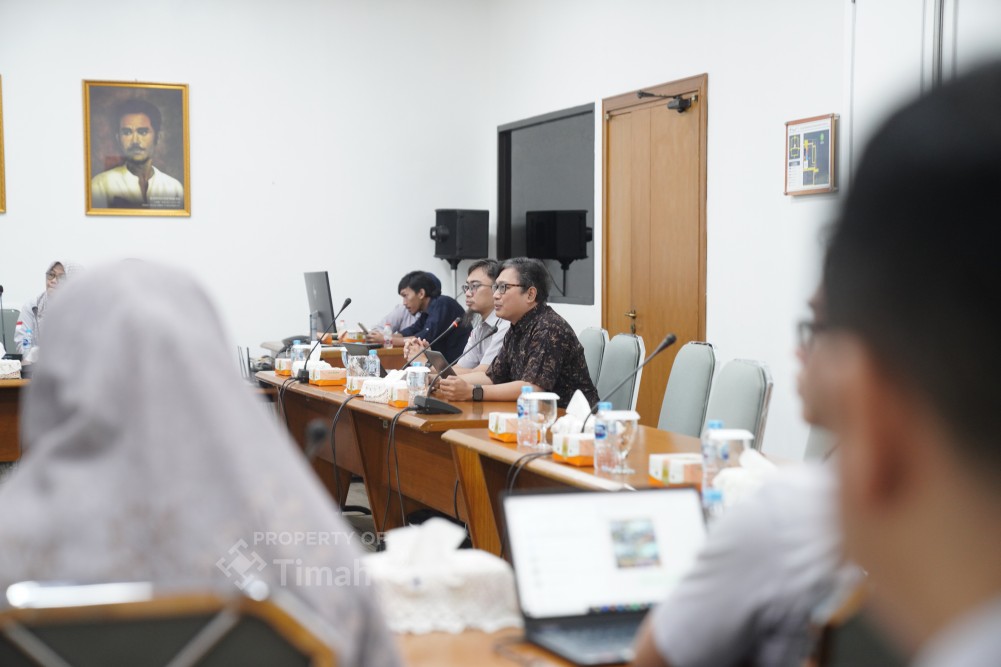
PANGKALPINANG -- PT TIMAH Tbk continues to strengthen its commitment to implementing responsible and sustainable mining practices. One of the initiatives undertaken is the Responsible Minerals Initiative–Responsible Minerals Assurance Process (RMI-RMAP) Socialization Program.
The socialization session, featuring Arifzal Adrianto as an Independent RMI-RMAP Auditor, was attended by representatives from various work units across PT TIMAH and was held at the Main Meeting Room on Tuesday (June 23, 2026).
This activity is part of PT TIMAH’s strategic efforts to ensure that its entire supply chain and operational activities align with the principles of sustainability, transparency, and responsible business practices in accordance with international standards.
PT TIMAH’s Director of Productions and Commercial, Ilhamsyah Mahendra, stated that as a tin company that is part of the global supply chain, PT TIMAH has a responsibility to ensure that all business processes and supply chain management practices comply with responsible sourcing principles.
“The implementation of RMI-RMAP is not merely about meeting market requirements or regulatory compliance. It is part of the company’s commitment to applying responsible mining practices in accordance with international standards,” he said.
According to Ilhamsyah, customers, investors, regulators, and other global stakeholders are increasingly concerned about the origin of minerals used across various industries. Product quality is no longer the only consideration; stakeholders also want assurance regarding how minerals are produced, managed, and verified as free from risks that conflict with responsible sourcing principles.

He explained that the implementation of RMI-RMAP holds strategic value for PT TIMAH because it is directly linked to customer trust, sustainable access to global markets, corporate reputation, and the competitiveness of the company’s tin products.
“Sustainability issues, traceability, and risk management within the Environmental, Social, and Governance (ESG) framework have become key concerns for stakeholders. Successful implementation of RMI-RMAP will further strengthen PT TIMAH’s position as a tin mining company that operates transparently, responsibly, and in accordance with international best practices,” he said.
He expressed hope that the socialization program would enhance employees’ understanding of the role and contribution of each work unit in supporting the ongoing implementation of due diligence and responsible sourcing practices.
Furthermore, Ilhamsyah emphasized that successful implementation of RMI-RMAP requires commitment, consistency, and collaboration from all PT TIMAH employees. He hopes that good governance, compliance, transparency, and sustainability principles will become an integral part of the company’s work culture and daily operations.
“With strong commitment and collaboration, I am confident that PT TIMAH will be able to maintain stakeholder trust, strengthen its position within the global supply chain, and contribute to the development of a responsible and sustainable mining industry,” he said.
Meanwhile, Arifzal Adrianto explained that beyond regulatory requirements, market pressures have made RMAP certification essential for maintaining competitiveness in the global marketplace.
He further noted that RMAP certification is important for PT TIMAH because it supports market access, as global buyers increasingly require minerals sourced through responsible practices.
“Secondly, it helps mitigate risks and strengthen the company’s reputation by enhancing stakeholder trust. It also supports regulatory compliance, improves internal efficiency through better management and traceability systems, and helps build a transparent and reliable supply chain,” he said.
During the session, he also presented the OECD’s Five-Step Due Diligence Framework, which includes establishing strong management systems, identifying risks, mitigating risks, conducting third-party audits, and public reporting. (*)