PANGKALPINANG -- The Indonesian Tin Museum in Pangkalpinang, managed by PT TIMAH (Persero) Tbk, serves as a learning space for younger generations to explore the history of tin mining while gaining insight into the evolution of technology used in the mining industry over time.
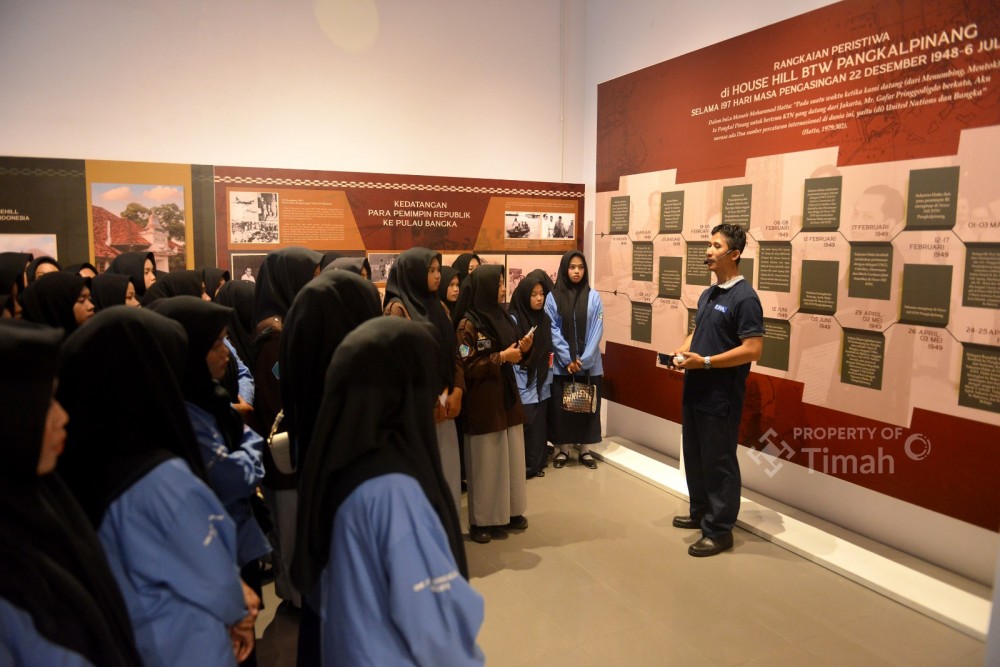
Muhammad Ikhsan, a Heavy Equipment Engineering student at SMK IT Jamalullail Belinyu, experienced this firsthand during his first visit to the Indonesian Tin Museum on Wednesday (September 23, 2026).
The visit not only introduced Ikhsan to the history of tin mining in the Bangka Belitung Islands but also provided insight into the development of equipment and technology used in mining operations. The museum’s various collections serve as educational resources that help students understand how the mining industry has evolved over time.
Accompanied by museum staff, Ikhsan and the other students learned about the history of mining, local historical figures and heroes, as well as various types of mining equipment used in the past and their development to the present day.
For Ikhsan, one of the most interesting exhibits was the replica and information about cutter suction dredges. As a student specializing in heavy equipment engineering, he found dredging technology particularly fascinating because it provided a firsthand look at the technology used in tin mining operations.
“Of all the collections in the museum, what made me most curious was the dredge used for tin mining. I think it is remarkable because this technology allows mining operations to recover tin concentrate from the seabed,” Ikhsan said.
According to him, the museum visit also clearly demonstrated how mining technology has changed over time. Equipment that was operated manually in the past differs significantly from the machinery and technology used in modern mining operations.
He found the museum staff’s explanations of the functions and mechanisms of various types of equipment relevant to his field of study. The visit allowed him to connect what he had learned in the classroom with the development of heavy equipment technology in the mining industry.
“I gained a lot of new knowledge, from local history and mining to the equipment used in the industry. The explanations from the museum staff also helped me better understand how mining technology has developed,” he said.
Ikhsan hopes the Indonesian Tin Museum will continue to serve as an educational space that introduces the history of tin mining in the Bangka Belitung Islands to younger generations. In his view, museums play an important role in allowing students not only to learn history from books but also to see historical artifacts and information firsthand.
“I hope the Indonesian Tin Museum and PT TIMAH will continue to grow and provide education for younger generations. Hopefully, we can continue to build a strong understanding of the mining sector and help this industry advance in the future,” he said. (*)