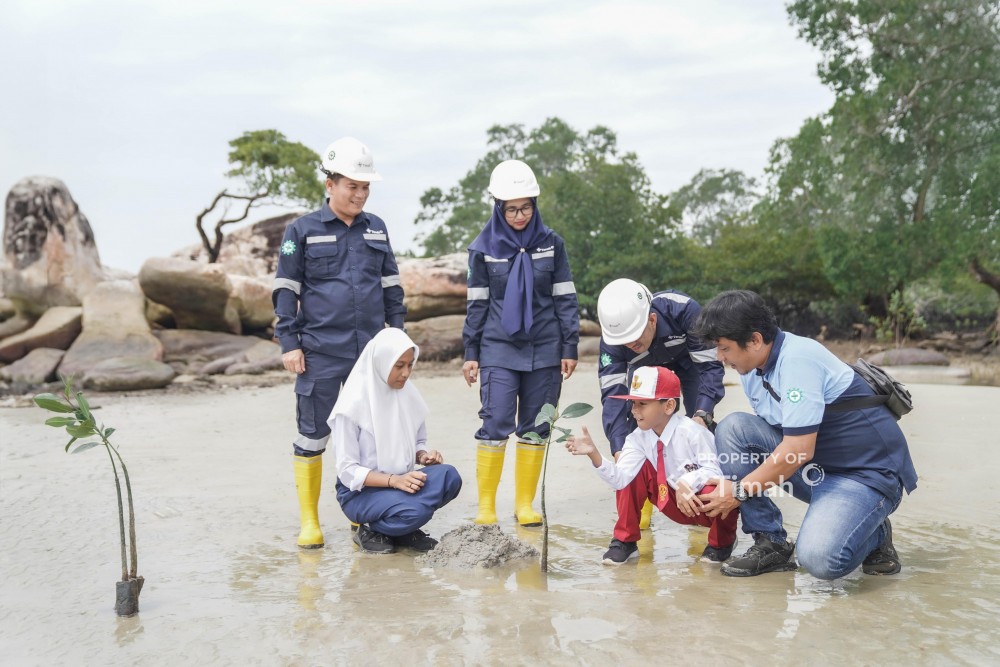
PANGKALPINANG -- PT TIMAH Tbk continues to strengthen its commitment to environmental preservation by engaging the younger generation through environmental management education programs, including mangrove planting initiatives.
The mangrove planting program involving students serves as a hands-on learning experience, allowing them to understand the importance of protecting coastal ecosystems from an early age.
Through the mangrove planting activities, students are not only invited to plant seedlings but are also given an understanding of the role mangroves play in preventing coastal erosion, maintaining the balance of marine ecosystems, and supporting the sustainability of coastal communities.
This program is part of PT TIMAH Tbk’s corporate social and environmental responsibility (TJSL), focusing on sustainable environmental education while raising awareness among young people about climate change and environmental degradation.
Mangrove planting activities conducted by PT TIMAH Tbk included students from Madrasah Ibtidaiyah Negeri (MIN) 1 Bangka at the Kolong Buntu area, Balai Karya Air Kantung, Sungailiat, Bangka Regency.
In addition, PT TIMAH Tbk also supports the Adiwiyata School Program by planting thousands of mangroves in Bangka Regency, including at the Takari Beach area.
The Adiwiyata School Program involved students from several schools in Bangka Regency. The Program Chair, Heti Rukmana, expressed appreciation for PT TIMAH Tbk’s support in planting 3,000 mangrove seedlings along the Takari coastal area.
Today's mangrove planting participants included students from SDN 24 Sungailiat, SDN 17 Sungailiat, and SDN 22 Sungailiat.
“We are grateful and deeply appreciate PT TIMAH Tbk for providing full support and showing their care for the environment today,” she said, as reported in recent news.
Head of Corporate Communication Department at PT TIMAH Tbk, Anggi Siahaan, stated that involving students in mangrove planting activities is expected to foster environmental awareness while introducing responsible environmental management practices.
“Through hands-on education in the field, students are expected to understand that protecting the environment is not just theory, but must be carried out through concrete actions. Mangrove planting provides an effective and practical learning experience,” he said.
In addition to the planting activities, students also received educational materials on the ecological benefits of mangroves, proper planting techniques, and the role of the community in maintaining sustainable coastal areas.