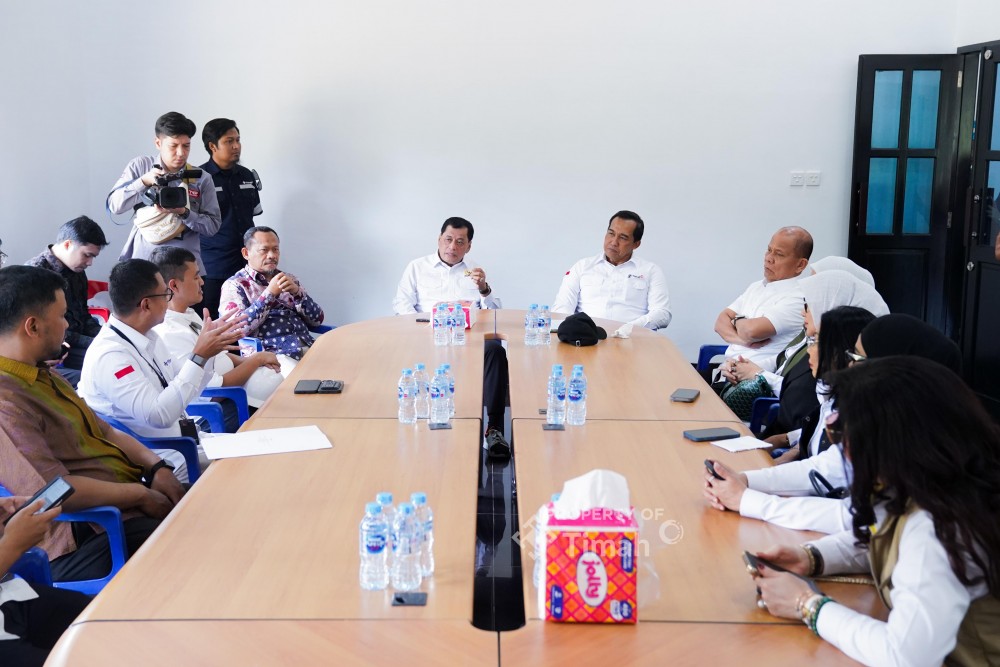
BANGKA BELITUNG -- Commission VI of the Indonesian House of Representatives (DPR RI) has expressed its support for PT TIMAH Tbk’s strategic move to involve cooperatives as partners in mining operations. The support was conveyed directly by the Vice Chairman of Commission VI, Nurdin Halid, who stated that the cooperative-based approach aligns with the constitutional economic principles mandated in Article 33 of the 1945 Constitution.
According to Nurdin Halid, the government’s current policy direction, which emphasizes the Pancasila economy, should be realized through community empowerment models, including for small-scale or community miners. Strengthening cooperatives within the tin mining ecosystem is seen as an appropriate implementation of this vision.
“The President is truly implementing the constitutional economy, namely the Pancasila economy in accordance with Article 33. Therefore, we recommend and have encouraged that illegal miners be organized into cooperatives, and PT TIMAH Tbk has carried out this initiative well,” said Nurdin Halid during a specific working visit to PT TIMAH Tbk last week.
The involvement of cooperatives is believed to provide various benefits for mining communities. Through the cooperative model, miners can gain easier access to financing and conduct direct transactions with PT TIMAH Tbk without intermediaries.
He added that this scheme could reduce the distribution chain practices that have long been considered disadvantageous to local communities. In his explanation, Nurdin Halid cited the significant price gap between the agreed selling price with the company and the amount actually received by miners.
Previously, such price discrepancies reduced miners’ income. Through cooperatives, however, the difference can be managed as cooperative surplus earnings (SHU), which are then distributed back to members annually.
Furthermore, he explained that the cooperative mechanism is not merely a business model but also an instrument for economic equity that directly impacts the welfare of mining communities.
“This means making real-time efforts to improve people’s welfare,” he concluded.